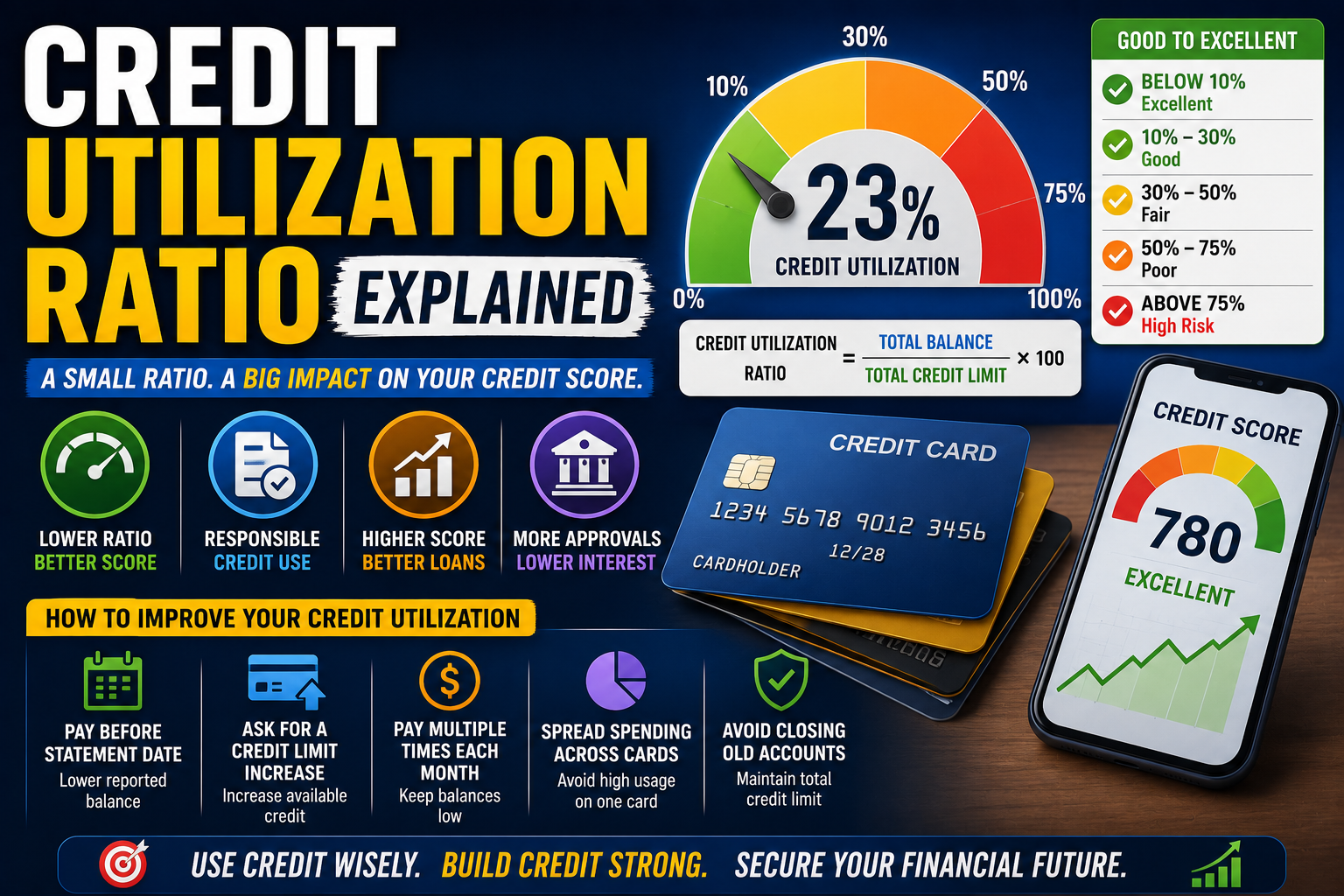
Learn everything about the Credit Utilization Ratio, including how it’s calculated, why it impacts your credit score, what percentage is considered good, and practical tips to improve your credit health.
Table of Contents
Whether you’re applying for a credit card, personal loan, mortgage, or auto loan, one financial metric can significantly influence your approval chances and borrowing costs: the Credit Utilization Ratio.
Many people assume that paying their credit card bill on time is enough to maintain an excellent credit score. While payment history is extremely important, lenders also evaluate how much of your available credit you’re actually using. Even individuals who never miss a payment can hurt their credit score if they consistently use a high percentage of their available credit limit.
The Credit Utilization Ratio is one of the most influential factors in credit scoring models used worldwide. It provides lenders with insight into your borrowing behavior and helps them determine whether you’re managing credit responsibly or relying too heavily on borrowed money.
In this guide, we’ll explain what the Credit Utilization Ratio is, how it’s calculated, why it matters, what percentage is considered healthy, common mistakes to avoid, and practical strategies to improve your credit score over time.
What Is a Credit Utilization Ratio?
A Credit Utilization Ratio (CUR) measures how much of your available revolving credit you’re currently using.
It compares your outstanding credit card balances to your total available credit limit.
For example, if your total credit limit is $10,000 and your outstanding balance is $2,000, your Credit Utilization Ratio is 20%.
This percentage helps lenders assess your financial discipline.
A lower utilization ratio generally suggests responsible credit management, while a high utilization ratio may indicate that you’re financially stretched or overly dependent on credit.
To learn more about responsible credit management, visit the Consumer Financial Protection Bureau (CFPB):
https://www.consumerfinance.gov
Why Is the Credit Utilization Ratio Important?
Credit utilization is one of the most significant factors used by major credit scoring models.
Lenders use it to answer questions such as:
- Are you managing your available credit responsibly?
- Do you frequently rely on borrowed money?
- Are you likely to repay future debt?
- Are you experiencing financial stress?
Even if you always pay your bills on time, consistently using a high percentage of your available credit can negatively affect your credit score.
Lower utilization generally signals financial stability and responsible borrowing habits.
How Is Credit Utilization Calculated?
The formula is straightforward:
Credit Utilization Ratio = (Total Credit Card Balance ÷ Total Credit Limit) × 100
Example 1
Credit Limit: $5,000
Outstanding Balance: $1,000
Credit Utilization:
($1,000 ÷ $5,000) × 100 = 20%
Example 2
Credit Limit: $20,000
Outstanding Balance: $18,000
Credit Utilization:
($18,000 ÷ $20,000) × 100 = 90%
Although both cardholders may pay on time, the second individual appears much riskier to lenders.
Individual Card vs Overall Credit Utilization
Many people believe only their total utilization matters.
In reality, lenders may evaluate both:
Overall Utilization
The combined balance across all credit cards compared to the combined credit limits.
Individual Card Utilization
The percentage used on each individual credit card.
For example:
Card A
Limit: $10,000
Balance: $9,000
Utilization: 90%
Card B
Limit: $10,000
Balance: $0
Overall utilization is only 45%, but one card is nearly maxed out, which some lenders may view negatively.
Maintaining low balances across individual cards is generally better than heavily using one card.
What Is Considered a Good Credit Utilization Ratio?
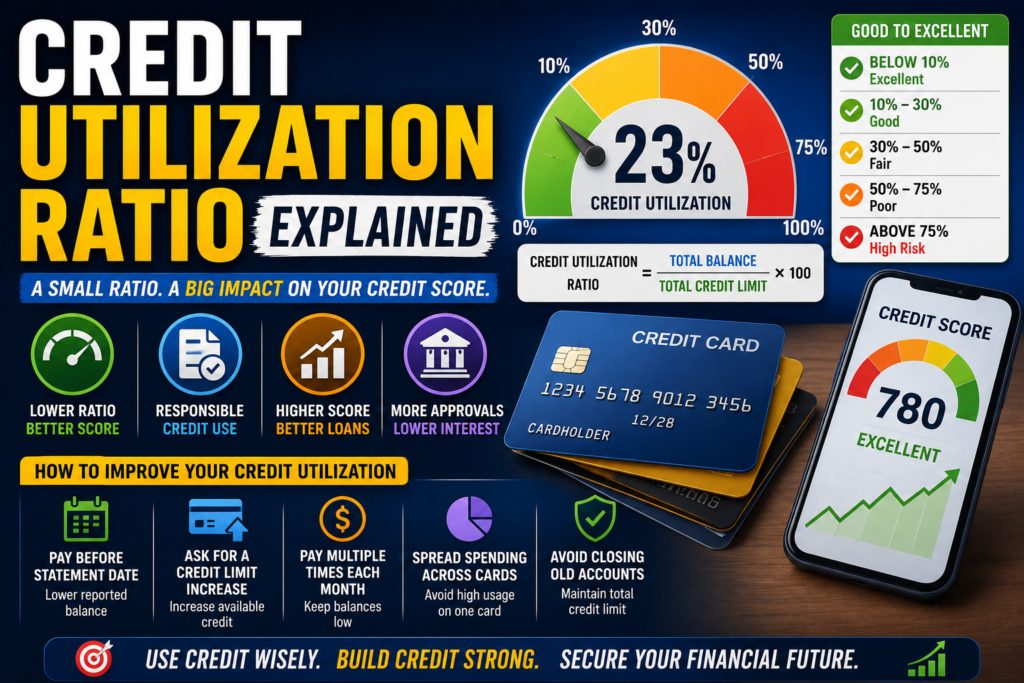
Although there is no universal rule, most financial experts recommend the following:
| Credit Utilization | General Impact |
|---|---|
| Below 10% | Excellent |
| 10%–30% | Good |
| 30%–50% | Fair |
| 50%–75% | Poor |
| Above 75% | High Risk |
Many people believe staying below 30% is enough, but individuals with excellent credit scores often maintain utilization below 10%.
How Credit Utilization Affects Your Credit Score
Credit scoring models evaluate your credit behavior using multiple factors.
Credit utilization demonstrates how responsibly you manage available credit.
High utilization may suggest:
- Greater financial stress
- Higher default risk
- Increased dependence on borrowing
Lower utilization often indicates:
- Responsible financial management
- Better budgeting habits
- Lower lending risk
This is why reducing your credit utilization can improve your credit score, even without increasing your income.
For educational resources on credit reports and scores, visit AnnualCreditReport.com:
https://www.annualcreditreport.com
Why Maxing Out a Credit Card Is Risky
Some people assume that using their entire credit limit and paying it off every month will improve their credit score.
Unfortunately, that’s not always true.
Credit card issuers often report balances before your payment due date.
If your balance is reported while your card is nearly maxed out, credit bureaus may record a very high utilization ratio—even if you pay the bill in full later.
This temporary spike can lower your credit score.
How to Lower Your Credit Utilization Ratio
Improving your Credit Utilization Ratio doesn’t necessarily require earning more money.
Several simple strategies can make a significant difference.
Pay Your Balance Before the Statement Closing Date
Many people pay on the due date.
However, paying part or all of your balance before the statement closing date can reduce the balance reported to credit bureaus.
Request a Higher Credit Limit
If your income and credit history have improved, your issuer may approve a credit limit increase.
For example:
Old Limit: $5,000
Balance: $1,500
Utilization = 30%
New Limit: $10,000
Same Balance: $1,500
Utilization = 15%
Without reducing your spending, your utilization immediately improves.
Pay Multiple Times Each Month
Instead of making one monthly payment, consider paying your credit card balance several times throughout the billing cycle.
This helps keep reported balances lower.
Spread Spending Across Multiple Cards
If you have several credit cards, distributing purchases can help avoid extremely high utilization on any single card.
Avoid Closing Old Credit Cards
Closing an unused credit card reduces your total available credit.
Lower available credit can increase your utilization percentage, even if your spending stays the same.
Unless there are annual fees or other compelling reasons, keeping older accounts open may support a healthier utilization ratio.
Common Myths About Credit Utilization
Myth 1: You Should Never Use Your Credit Card
False.
Responsible credit card usage can actually help build a positive credit history.
Myth 2: Carrying a Balance Improves Your Credit Score
False.
Paying unnecessary interest does not improve your credit score.
Using credit responsibly and paying balances on time is generally the better approach.
Myth 3: A Higher Credit Limit Encourages Debt
Not necessarily.
If spending habits remain unchanged, a higher credit limit can actually reduce your utilization ratio.
Common Mistakes People Make
Many consumers unintentionally damage their credit profile.
Some common mistakes include:
- Maxing out credit cards.
- Paying only the minimum amount due.
- Ignoring statement closing dates.
- Closing old accounts without understanding the impact.
- Applying for multiple credit cards within a short period.
- Using one card heavily while leaving others unused.
Avoiding these habits can contribute to stronger long-term credit health.
How Lenders Use Credit Utilization
Banks and lenders review your Credit Utilization Ratio when evaluating applications for:
- Credit cards
- Personal loans
- Mortgages
- Auto loans
- Business financing
A lower utilization ratio generally indicates lower lending risk, which may improve your chances of approval and help you qualify for more favorable interest rates.
Frequently Asked Questions
What is the ideal Credit Utilization Ratio?
Many financial experts recommend keeping your utilization below 30%, while maintaining it below 10% is often associated with excellent credit profiles.
Does paying my credit card in full eliminate utilization?
Not always. If your issuer reports your balance before your payment is processed, a utilization percentage may still appear on your credit report.
Can increasing my credit limit improve my credit score?
Potentially, yes. If your spending remains the same, a higher credit limit lowers your utilization ratio.
Does closing a credit card improve my credit score?
In many cases, no. Closing a card reduces your available credit and may increase your utilization ratio.
Conclusion
Understanding the Credit Utilization Ratio is essential for anyone looking to build and maintain a strong credit profile. While paying your bills on time remains the most important habit, how much of your available credit you use also plays a significant role in how lenders evaluate your financial responsibility.
Keeping your utilization low, paying balances before statement closing dates, avoiding unnecessary debt, and maintaining a healthy mix of available credit can all contribute to a stronger credit score over time. Rather than viewing your credit limit as spending power, think of it as a tool that should be managed carefully.
Whether you’re planning to apply for a mortgage, finance a vehicle, start a business, or simply improve your financial health, maintaining a healthy Credit Utilization Ratio can increase your borrowing opportunities and reduce your financing costs in the future.
Discover the most important economic indicators every investor should know. Learn how GDP, inflation, interest rates, unemployment, PMI, and other key indicators influence stock markets, bonds, and investment decisions.
