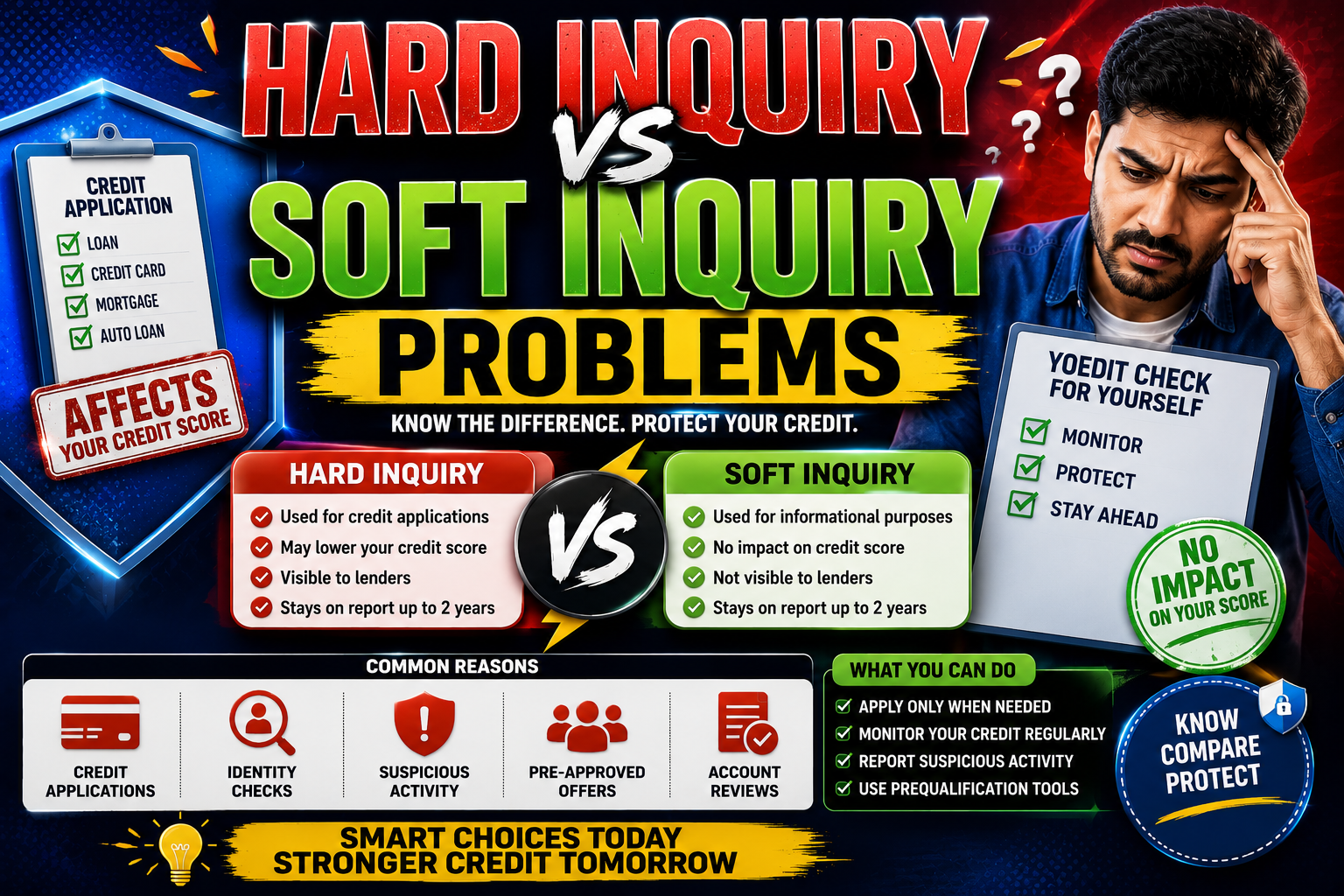
Learn the difference between Hard Inquiry vs Soft Inquiry Problems, how each type of credit inquiry affects your credit report and credit score, and practical tips to protect your financial profile.
Table of Contents
Whenever you apply for a credit card, personal loan, mortgage, auto loan, or even some rental agreements, the lender may review your credit history before making a decision. This review is known as a credit inquiry.
Many people are surprised to discover that not all credit inquiries are the same. Some inquiries have no effect on your credit score, while others may temporarily lower it. Understanding the difference between a hard inquiry and a soft inquiry is essential for managing your credit responsibly and avoiding unnecessary damage to your financial profile.
A common misconception is that every time someone checks your credit report, your credit score drops. In reality, only certain types of credit checks affect your score, and even then, the impact is usually temporary. However, submitting multiple credit applications within a short period can raise concerns among lenders and influence future borrowing decisions.
In this guide, we’ll explain Hard Inquiry vs Soft Inquiry Problems, how each inquiry works, their impact on your credit report, common situations where they occur, and practical strategies to maintain a healthy credit profile.
What Is a Credit Inquiry?
A credit inquiry occurs when someone requests access to your credit report.
Credit inquiries help lenders evaluate your creditworthiness before extending credit or financial services.
There are two primary types of credit inquiries:
- Hard Inquiry
- Soft Inquiry
Although both involve reviewing your credit information, they serve different purposes and have different effects on your credit score.
To learn more about credit reports and consumer rights, visit the Consumer Financial Protection Bureau (CFPB):
https://www.consumerfinance.gov
What Is a Hard Inquiry?
A hard inquiry occurs when you apply for new credit and authorize a lender or financial institution to review your credit report as part of the approval process.
Hard inquiries typically occur when applying for:
- Credit cards
- Personal loans
- Mortgages
- Auto loans
- Business loans
- Lines of credit
- Some rental applications
Because the lender is evaluating whether to extend credit, the inquiry becomes part of your credit history.
How Does a Hard Inquiry Affect Your Credit Score?
A single hard inquiry generally has only a small impact on your credit score.
However, multiple hard inquiries within a short period may indicate that you’re actively seeking new credit, which some lenders may view as a higher lending risk.
The actual impact depends on factors such as:
- Your overall credit history
- Existing debt
- Number of recent inquiries
- Credit scoring model used
- Overall financial profile
For many individuals with strong credit histories, one hard inquiry may have only a minimal and temporary effect.
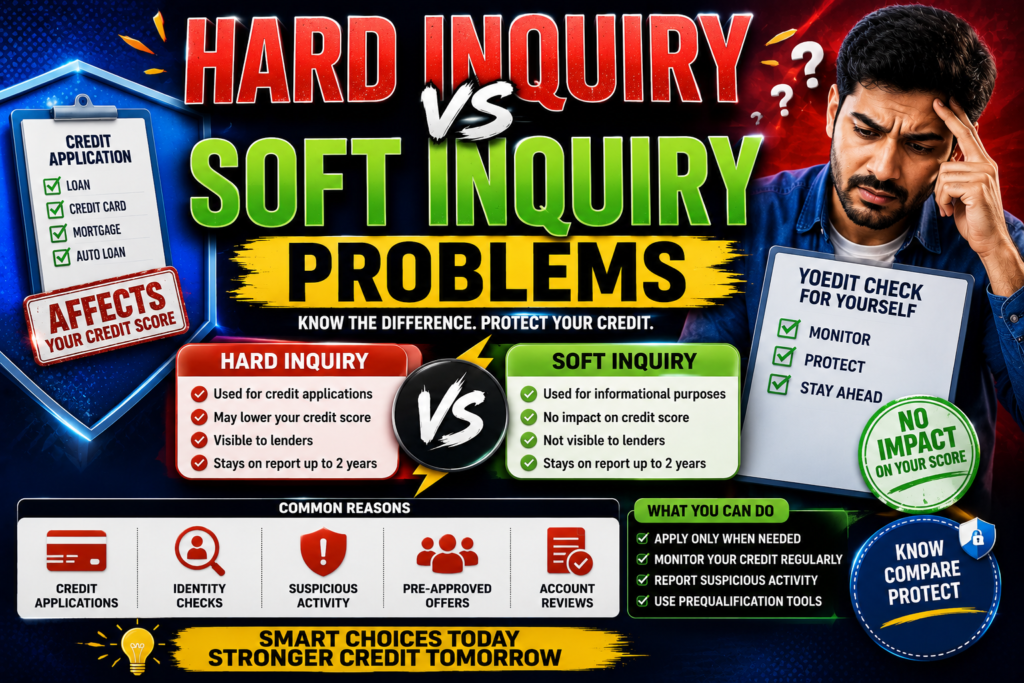
Common Situations That Trigger Hard Inquiries
Examples include:
- Applying for a new credit card
- Applying for a mortgage
- Applying for an auto loan
- Requesting a business loan
- Applying for certain financing programs
- Opening a new line of credit
In each case, the lender evaluates your credit before making a lending decision.
What Is a Soft Inquiry?
A soft inquiry occurs when your credit report is reviewed for informational purposes rather than to approve new credit.
Unlike hard inquiries, soft inquiries generally do not affect your credit score.
They are commonly used for:
- Checking your own credit report
- Pre-approved credit offers
- Background screening
- Existing account reviews
- Employment-related credit checks (where permitted by law)
- Identity verification
Soft inquiries are generally visible only to you and do not influence lending decisions.
How Does a Soft Inquiry Affect Your Credit Score?
In most credit scoring models, soft inquiries have no impact on your credit score.
Checking your own credit report regularly is considered a responsible financial habit and does not reduce your creditworthiness.
Monitoring your credit helps identify errors, fraud, and unauthorized activity early.
You can learn more about obtaining your credit report through AnnualCreditReport.com:
https://www.annualcreditreport.com
Hard Inquiry vs Soft Inquiry: Key Differences
| Feature | Hard Inquiry | Soft Inquiry |
|---|---|---|
| Purpose | Credit application | Informational review |
| Credit Score Impact | May temporarily affect score | No impact |
| Requires Permission | Usually yes | Often not required, depending on purpose and local regulations |
| Visible to Lenders | Yes | Usually no |
| Common Examples | Loans, credit cards, mortgages | Credit monitoring, pre-approvals, account reviews |
How Long Do Hard Inquiries Stay on a Credit Report?
In many countries, including the United States, hard inquiries may remain on your credit report for up to two years.
However, their effect on your credit score typically decreases over time, especially if you continue demonstrating responsible credit behavior.
As older inquiries become less relevant, lenders generally place greater emphasis on your recent payment history and overall credit management.
Why Do Lenders Care About Hard Inquiries?
Lenders use hard inquiries as one indicator of borrowing activity.
Several recent hard inquiries may suggest that an applicant is:
- Seeking multiple loans
- Experiencing financial stress
- Increasing debt obligations
- Rapidly expanding available credit
However, lenders consider many factors—not just inquiries—when evaluating credit applications.
Does Rate Shopping Hurt Your Credit?
Many people compare multiple mortgage or auto loan offers before making a decision.
Fortunately, many modern credit scoring models recognize rate shopping.
When several hard inquiries for the same type of loan occur within a limited period, they may be treated as a single inquiry for scoring purposes.
This encourages consumers to compare loan offers without being unfairly penalized.
The exact treatment depends on the credit scoring model being used.
Learn more about credit scoring from FICO:
Common Hard Inquiry Problems
Although hard inquiries are normal, certain situations can create problems.
Too Many Credit Applications
Submitting multiple credit applications within a short period may temporarily reduce your credit score and raise concerns among lenders.
Applying Without Research
Applying for credit without first reviewing eligibility requirements increases the likelihood of unnecessary hard inquiries.
Researching products beforehand helps reduce unnecessary applications.
Identity Theft
Unauthorized hard inquiries may indicate someone is attempting to obtain credit using your personal information.
Regularly reviewing your credit report helps identify suspicious activity.
Frequent Credit Card Applications
Applying repeatedly for promotional credit cards may result in numerous hard inquiries over time.
Strategic credit planning is generally more beneficial than applying impulsively.
Benefits of Soft Inquiries
Soft inquiries provide several advantages.
Safe Credit Monitoring
You can review your own credit report regularly without affecting your credit score.
Identity Protection
Frequent monitoring helps detect fraudulent accounts or unauthorized inquiries early.
Pre-Approved Offers
Financial institutions may perform soft inquiries when determining eligibility for pre-approved financial products.
These offers do not affect your credit score.
How to Protect Your Credit Profile
Maintaining healthy credit habits reduces unnecessary inquiry-related concerns.
Apply Only When Necessary
Avoid submitting multiple credit applications unless genuinely needed.
Compare Eligibility First
Many lenders provide prequalification tools using soft inquiries.
These allow you to estimate approval chances without affecting your credit score.
Monitor Your Credit Regularly
Review your credit report periodically for:
- Unauthorized inquiries
- Incorrect account information
- Identity theft
- Reporting errors
Report Suspicious Activity
If you notice hard inquiries you don’t recognize, contact the relevant credit bureau and financial institution immediately.
Prompt action may help limit identity theft or fraud.
The Federal Trade Commission (FTC) provides resources on identity theft and fraud prevention:
Common Myths About Hard and Soft Inquiries
Myth 1: Every Credit Check Lowers Your Score
False.
Soft inquiries generally do not affect your credit score.
Myth 2: Checking My Own Credit Report Is Harmful
False.
Reviewing your own credit report is considered a soft inquiry.
Myth 3: One Hard Inquiry Will Ruin My Credit
False.
A single hard inquiry usually has only a small and temporary effect on your credit score.
Frequently Asked Questions
What is the difference between Hard Inquiry vs Soft Inquiry Problems?
A hard inquiry occurs when you apply for new credit and may temporarily affect your credit score. A soft inquiry is used for informational purposes and generally has no impact on your credit score.
How long do hard inquiries remain on a credit report?
In many jurisdictions, hard inquiries may remain visible for up to two years, although their influence on your credit score typically decreases over time.
Can I check my own credit report without lowering my score?
Yes. Checking your own credit report is generally considered a soft inquiry and does not affect your credit score.
Should I avoid hard inquiries completely?
No. Hard inquiries are a normal part of applying for credit. The goal is to avoid unnecessary applications rather than avoiding legitimate credit needs.
Conclusion
Understanding Hard Inquiry vs Soft Inquiry Problems is an important part of building and maintaining a healthy credit profile. While hard inquiries are a normal part of applying for loans, credit cards, and other forms of financing, submitting too many applications within a short period can temporarily affect your credit score and influence how lenders assess your financial behavior. Soft inquiries, on the other hand, are generally harmless and allow you to monitor your credit, receive pre-approved offers, and verify your financial information without impacting your creditworthiness.
The best approach is to apply for new credit thoughtfully, use prequalification tools when available, and regularly review your credit report for accuracy and signs of fraud. By understanding how different types of credit inquiries work and managing them responsibly, you can protect your credit score, improve your borrowing opportunities, and make more informed financial decisions throughout your lifetime.
Learn why your PayPal Account Limited notification appears, the most common reasons for account limitations, how to remove restrictions, and practical tips to prevent future limitations.
