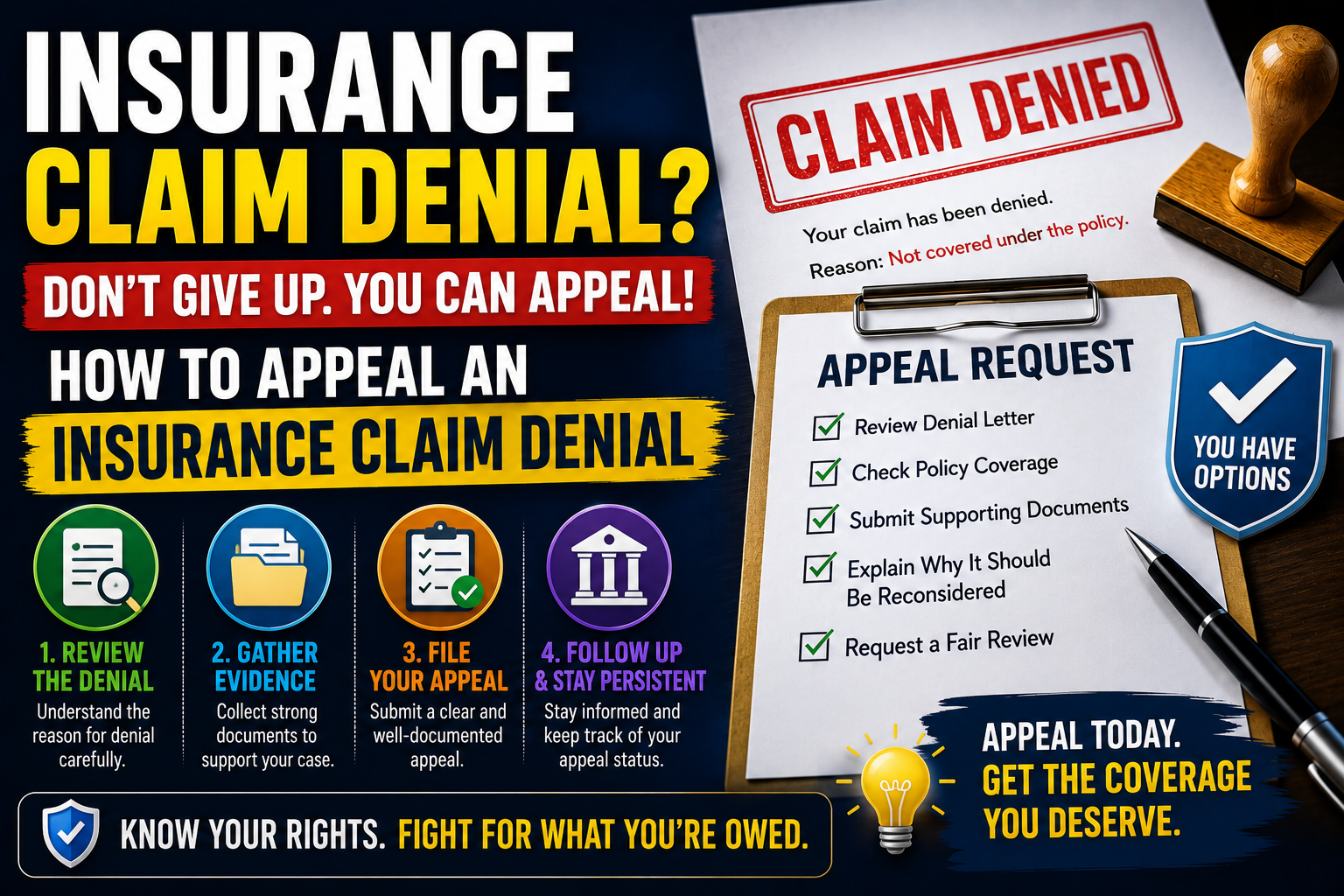
Learn how to appeal an Insurance Claim Denial with this step-by-step guide. Discover common reasons claims are denied, how the appeals process works, and practical tips to improve your chances of a successful outcome.
Table of Contents
Receiving notice that your insurance claim has been denied can be frustrating, stressful, and financially overwhelming. Whether the claim involves health insurance, auto insurance, homeowners insurance, travel insurance, life insurance, or business insurance, a denial doesn’t always mean the decision is final.
Insurance companies process millions of claims every year. While many are approved, others may be denied because of missing documentation, policy exclusions, administrative errors, disputes over coverage, or disagreements about the facts of the claim. In some situations, the denial is justified under the terms of the insurance policy. In others, the decision may be based on incomplete information or an error that can be corrected through an appeal.
Understanding how the insurance appeals process works can help policyholders challenge unfair decisions, provide additional evidence, and potentially secure the benefits they’re entitled to receive.
In this guide, we’ll explain the most common reasons for an Insurance Claim Denial, how to review the insurer’s decision, the steps involved in filing an appeal, and practical strategies that can improve your chances of a successful outcome.
What Is an Insurance Claim Denial?
An Insurance Claim Denial occurs when an insurance company refuses to pay all or part of a claim submitted by a policyholder or beneficiary.
The denial may involve:
- Health insurance
- Auto insurance
- Homeowners insurance
- Renters insurance
- Travel insurance
- Life insurance
- Disability insurance
- Business insurance
A denial does not necessarily mean the insurer acted improperly. Every insurance policy contains specific terms, exclusions, coverage limits, and conditions that determine whether a claim qualifies for payment.
Understanding the reason for the denial is the first step toward deciding whether an appeal is appropriate.
Learn more about insurance consumer protections through the National Association of Insurance Commissioners (NAIC):
Common Reasons Insurance Claims Are Denied
Insurance companies deny claims for many different reasons.
Some of the most common include:
Policy Exclusions
Insurance policies clearly identify situations that are not covered.
Examples may include:
- Intentional damage
- Certain natural disasters
- Wear and tear
- Pre-existing conditions (depending on policy type)
- Uninsured activities
If the claim falls within an exclusion, the insurer may legally deny coverage.
Missing Documentation
Claims often require supporting evidence such as:
- Medical records
- Police reports
- Repair estimates
- Photographs
- Receipts
- Proof of ownership
Missing documents can delay or prevent claim approval.
Late Claim Submission
Many insurance policies require claims to be submitted within specific deadlines.
Missing these deadlines may result in denial.
Insufficient Evidence
The insurer may conclude that the submitted information does not adequately support the claim.
Providing additional documentation may strengthen an appeal.
Administrative Errors
Mistakes happen.
Examples include:
- Incorrect policy numbers
- Data entry errors
- Missing signatures
- Processing mistakes
Simple administrative issues are often resolved quickly once identified.
Coverage Limits
Even when a claim is valid, reimbursement may be limited by:
- Deductibles
- Maximum benefit limits
- Policy caps
- Coverage restrictions
Should You Appeal an Insurance Claim Denial?
Not every denial should automatically be appealed.
First, carefully review:
- The denial letter
- Your insurance policy
- Supporting documentation
- The insurer’s explanation
If you believe:
- Important evidence was overlooked,
- The policy was interpreted incorrectly,
- A factual error occurred, or
- Additional documentation supports your claim,
an appeal may be worthwhile.
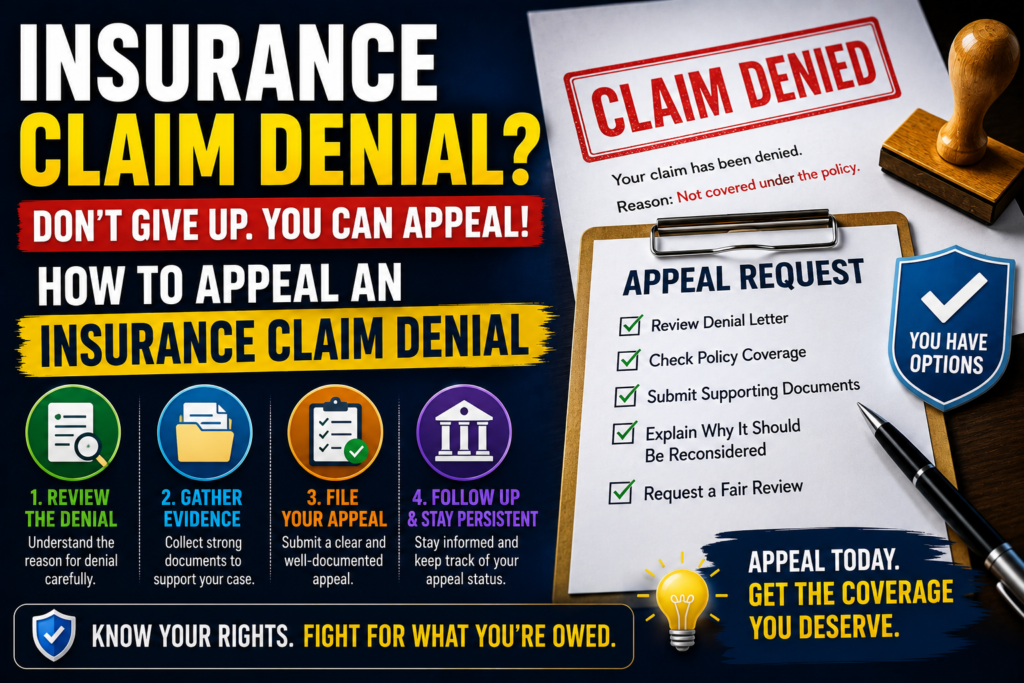
Step 1: Read the Denial Letter Carefully
The insurance company should explain why the claim was denied.
Look for information such as:
- Reason for denial
- Policy provisions cited
- Missing information
- Appeal deadline
- Appeal instructions
Understanding the exact reason helps determine the best response.
Step 2: Review Your Insurance Policy
Read the relevant sections of your insurance contract.
Pay particular attention to:
- Coverage terms
- Exclusions
- Deductibles
- Definitions
- Conditions
- Claim procedures
Many disputes result from misunderstandings about policy language.
Step 3: Gather Supporting Evidence
Strong evidence often improves the chances of a successful appeal.
Depending on the claim type, useful documentation may include:
- Medical reports
- Physician statements
- Expert opinions
- Repair invoices
- Accident reports
- Witness statements
- Property photographs
- Maintenance records
- Financial documents
The stronger your evidence, the stronger your appeal.
Step 4: Contact the Insurance Company
Before filing a formal appeal, consider speaking with the insurer.
Ask:
- Why was the claim denied?
- Is additional documentation needed?
- Can the claim be reconsidered informally?
- What is the appeal process?
Sometimes simple misunderstandings can be resolved without a formal appeal.
Step 5: Submit a Written Appeal
If the issue remains unresolved, prepare a formal appeal.
Your appeal should clearly include:
- Policy number
- Claim number
- Date of denial
- Reason you disagree
- Supporting evidence
- Specific request for reconsideration
Keep the letter factual, professional, and organized.
Avoid emotional language.
Step 6: Keep Copies of Everything
Maintain copies of:
- Appeal letters
- Emails
- Medical records
- Repair estimates
- Receipts
- Photographs
- Delivery confirmations
Organized records are valuable if the dispute continues.
Step 7: Follow Up
Insurance companies may require time to review appeals.
If you do not receive updates within the expected timeframe, politely follow up through the insurer’s official customer service channels.
Document:
- Dates
- Representatives’ names
- Reference numbers
- Conversation summaries
Good documentation supports future communication.
What Happens During an Appeal?
The insurance company may:
- Review new evidence.
- Request additional documentation.
- Consult medical experts or adjusters.
- Reassess policy interpretation.
- Reverse the original decision.
- Uphold the denial.
Each insurer follows its own appeal procedures, subject to applicable laws and regulations.
What If the Appeal Is Denied?
If the insurer upholds the denial, additional options may still exist depending on your jurisdiction and policy.
Possible next steps include:
- Requesting an internal review
- Filing a complaint with the relevant insurance regulator
- Seeking independent dispute resolution or mediation
- Consulting a qualified attorney
- Pursuing legal action where appropriate
The availability of these options varies by country and local law.
To learn more about consumer dispute resolution, visit the International Association of Insurance Supervisors (IAIS):
Tips to Improve Your Chances of Success
Consider these best practices:
Act Quickly
Appeals often have strict deadlines.
Missing the deadline may eliminate your right to challenge the decision.
Stay Organized
Maintain a complete file containing every document related to your claim.
Be Clear and Professional
Focus on facts rather than emotions.
Clearly explain why you believe the denial should be reconsidered.
Support Every Argument
Whenever possible, include documentation supporting each point you make.
Know Your Policy
Understanding your insurance contract strengthens your ability to challenge incorrect decisions.
Common Mistakes During Insurance Appeals
Many policyholders unintentionally weaken their appeals.
Common mistakes include:
- Ignoring appeal deadlines.
- Submitting incomplete documentation.
- Failing to read the policy carefully.
- Sending emotional rather than factual responses.
- Not keeping copies of correspondence.
- Assuming the first denial is always final.
Careful preparation often improves the appeal process.
Frequently Asked Questions
What is an Insurance Claim Denial?
An Insurance Claim Denial occurs when an insurance company refuses to pay part or all of a submitted claim based on the terms of the policy or other factors.
Can I appeal an insurance claim denial?
Yes. Most insurers provide a formal appeals process that allows policyholders to submit additional information and request reconsideration.
How long do I have to file an appeal?
Appeal deadlines vary depending on the insurer, policy, and applicable regulations. Always review the denial letter and policy documents carefully.
What documents should I include in my appeal?
Relevant documents may include medical records, repair estimates, photographs, receipts, expert opinions, accident reports, and any other evidence supporting your claim.
Conclusion
An Insurance Claim Denial can be disappointing, but it should not always be viewed as the end of the claims process. Many denials result from missing documentation, administrative errors, misunderstandings of policy terms, or incomplete information that can often be addressed through a well-prepared appeal. Taking the time to understand the insurer’s reasoning, reviewing your policy carefully, and gathering strong supporting evidence can significantly improve your chances of a successful outcome.
The key is to remain organized, act within the required deadlines, and communicate professionally throughout the process. Whether your claim involves health, auto, property, travel, or business insurance, knowing your rights and following the appropriate appeals procedure can help ensure that your claim receives a fair and thorough review.
Learn how a Romance Investment Scam works, the warning signs to watch for, common scam tactics, real-world examples, and practical ways to protect yourself from financial fraud.
