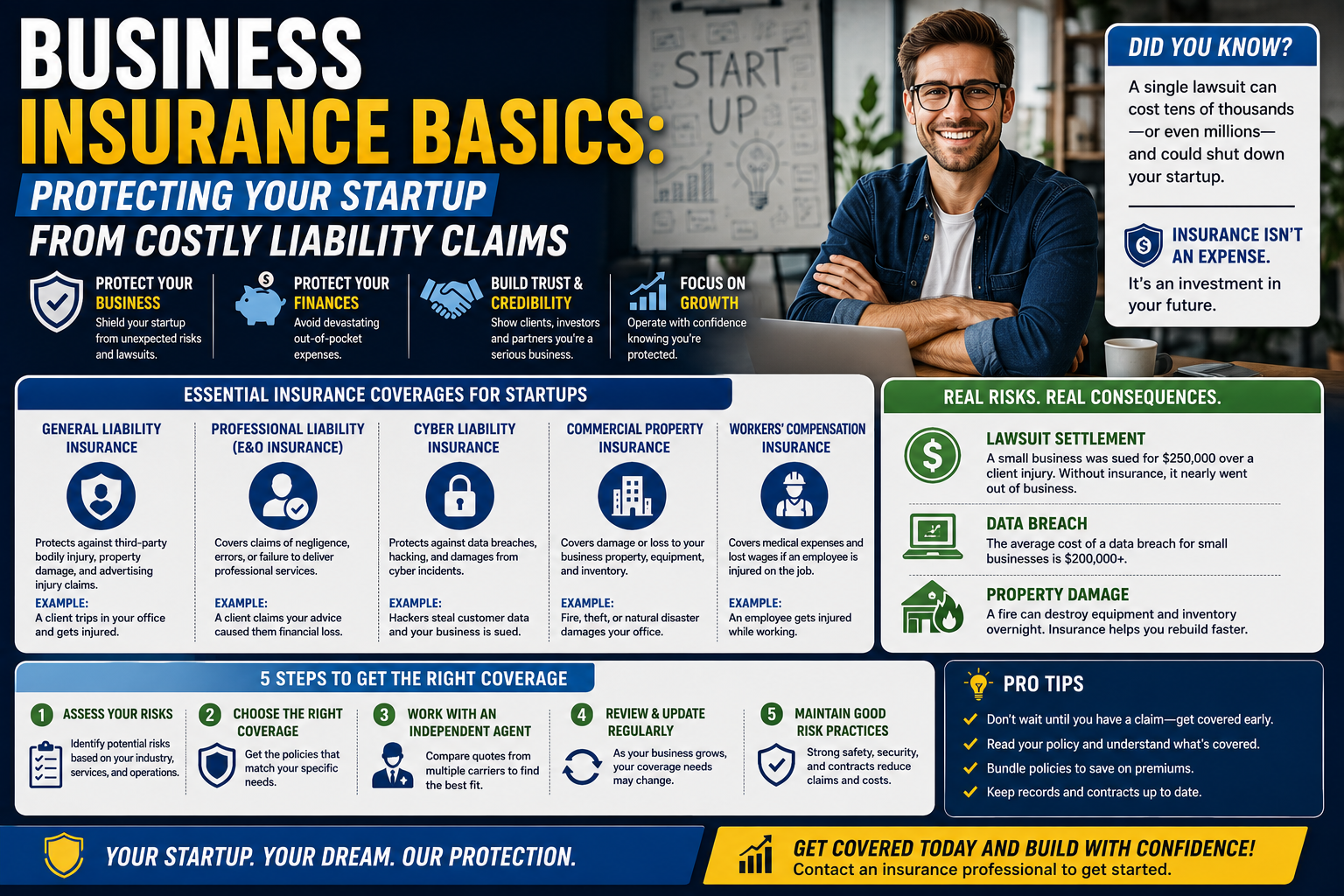
Discover essential business insurance strategies to shield your startup from unexpected liability claims, lawsuits, and devastating financial losses.
Table of Contents
Launching a startup brings a thrilling rush of adrenaline, long hours, and relentless problem-solving. You focus heavily on building a great product, closing your first customers, and keeping your cash flow positive. Amid that startup chaos, however, it is entirely too easy to overlook the invisible hazards lurking right around the corner. A single slip-and-fall accident in your office, a disgruntled client claiming your software caused a data breach, or a copyright dispute can instantly shatter months of hard work. That is why securing comprehensive business insurance is not just a boring administrative checkbox; it is your ultimate corporate safety net.
Many early-stage founders make the dangerous mistake of postponing coverage until they feel “big enough” to warrant the expense. Unfortunately, lawsuits do not wait for your revenue milestones. If you are operating without proper protection, a single court judgment can wipe out your company reserves overnight. Let us walk through the foundational concepts of business insurance together, cutting through the dense insurance jargon and giving you a practical guide to safeguarding your enterprise.
Why Every Startup Needs Protection from Day One
When you are bootstrapping a new venture, every single dollar counts. Spending money on monthly policy premiums can feel like throwing cash into a black hole when nothing has gone wrong yet.
Think of your coverage not as an unnecessary expense, but as a core operational shield. If a client alleges that your professional advice caused them financial harm, defending yourself in court can cost tens of thousands of dollars in legal fees alone—even if you win the case. Having the right business insurance policy in place means an insurance carrier steps in to handle legal defense costs and potential settlements, keeping your doors open when disaster strikes.
- Lawsuit Defense Coverage: Legal fees accumulate rapidly; policies cover attorney retainers and court costs.
- Contractual Requirements: Major B2B clients and commercial landlords will routinely refuse to sign leases or contracts without proof of active coverage.
- Founder Asset Protection: Proper policies help prevent personal liability judgments from seizing your personal savings and real estate.
Integrating adequate business insurance into your early operational framework ensures that a single unexpected mishap does not derail your entrepreneurial journey.
Core Types of Coverage Every Founder Should Know
The commercial coverage market offers dozens of niche policies, but most startups only need a few foundational pillars to stay fully protected against everyday operational risks.
General Liability Coverage
This is the absolute baseline of commercial protection. General liability protects your startup against third-party claims involving bodily injury, property damage, and personal injury. If a client visits your office, trips over a loose cable, and breaks a wrist, this component of your business insurance handles the medical bills and legal defense. You can review guidelines on liability insurance to understand how these legal protections function across different corporate sectors.
Professional Liability (Errors and Omissions)
If your startup sells services, consulting, code, or specialized expertise, general liability alone will not save you. If a client claims your deliverables contained errors or missed deadlines that cost them money, professional liability steps in. This specialized branch of business insurance is critical for tech startups, marketing agencies, and financial consultants.
Workers’ Compensation Protection
The moment you hire your first employee or bring on a full-time contractor in certain jurisdictions, state laws often mandate workers’ compensation. It covers medical expenses and lost wages if an employee gets hurt on the job, shielding your startup from severe statutory fines and employee lawsuits.
How to Choose the Right Policy and Provider
Navigating quotes can feel like decoding an ancient language. Shopping smartly requires looking past the monthly premium price tag and evaluating what the policy actually covers.
First, audit your specific operational risks. Do you handle sensitive consumer data? If so, adding cyber liability to your business insurance portfolio is non-negotiable in today’s digital landscape. Next, check the financial stability ratings of the carriers you consider. You want a provider with a proven track record of paying out claims promptly without bureaucratic stonewalling. You can check insights on risk management to see how structured mitigation strategies protect corporate balance sheets over time.
Work with an independent broker who understands your specific niche rather than buying a generic one-size-fits-all package online.
Common Pitfalls to Avoid When Buying Coverage
Even cautious founders sometimes stumble when setting up their initial commercial policies, leaving dangerous coverage gaps.
- Underestimating Coverage Limits: Opting for the absolute minimum policy limit to save a few dollars often leaves you exposed when a major lawsuit hits.
- Failing to Update Policies as You Scale: As your headcount grows and your product lines expand, your old business insurance limits will quickly become inadequate.
- Assuming Independent Contractors Are Covered: Assuming freelance workers do not trigger workers’ compensation rules or liability exposures can lead to severe regulatory penalties.
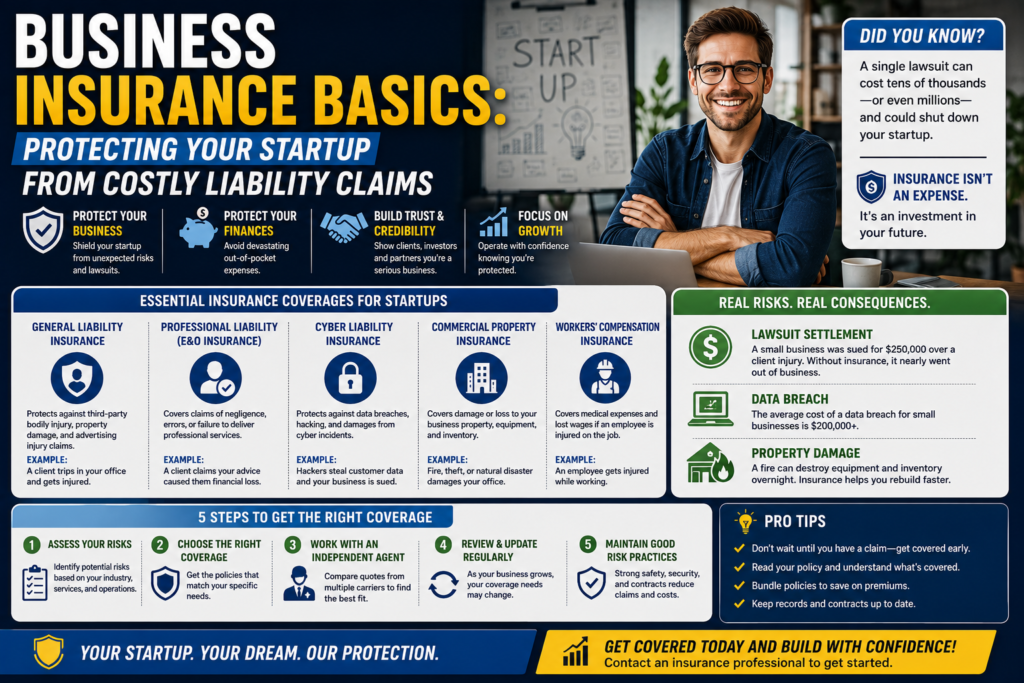
Avoiding these common missteps ensures your business insurance portfolio remains resilient, legally compliant, and customized to your actual business activities.
FAQs
What is the absolute minimum business insurance a startup needs?
Most early-stage ventures start with a Business Owner’s Policy (BOP), which bundles general liability and commercial property coverage together, frequently paired with professional liability depending on the industry.
Is business insurance legally mandatory for all companies?
It depends entirely on your industry, location, and structure. While general liability is rarely mandated by law, workers’ compensation is strictly required in almost every state the moment you hire employees, and commercial auto insurance is required if you use vehicles for business.
How much does standard business insurance cost for a small startup?
Premiums vary widely based on your industry risk profile, revenue, location, and coverage limits. Many low-risk digital startups can secure basic foundational business insurance policies for a few hundred dollars a month.
Does general liability cover cyber attacks and data breaches?
No. Standard general liability explicitly excludes cyber incidents. If your startup stores customer data or processes online payments, you must secure a separate cyber liability component within your business insurance suite.
Can I bundle multiple policies to save money?
Yes. Many commercial carriers offer a Business Owner’s Policy (BOP) that combines property, general liability, and business interruption coverage into a single discounted package for small enterprises.
Conclusion
Building a successful startup requires taking calculated risks, but leaving your enterprise exposed to avoidable legal liabilities is a gamble no founder should take. Waiting until a lawsuit lands on your doorstep is far too late to start shopping for protection. By evaluating your operational risks early, purchasing tailored coverage, and updating your policies as you grow, you establish a resilient foundation for the future. Ultimately, investing in robust business insurance provides the peace of mind, credibility, and security your startup needs to scale fearlessly.
