REITs vs. physical real estate : Compare REITs and physical real estate to discover which investment path delivers higher returns, better liquidity, and ideal portfolio growth.

Table of Contents
Every aspiring investor eventually faces the classic real estate dilemma: do you scrape together a massive down payment to buy physical property, or do you click a button on a brokerage app to buy shares in a corporate trust? Standing at that crossroads can feel overwhelming. Buying a rental house means dealing with midnight maintenance calls and tenant turnover, while purchasing public shares removes you entirely from the tangible thrill of brick-and-mortar ownership. When evaluating REITs vs. physical real estate, the choice ultimately boils down to your personal capital, time constraints, and risk tolerance.
Many wealth-builders assume that owning physical buildings is the only true way to build generational security, while stock market enthusiasts argue that digital funds offer superior freedom. The reality is far more nuanced. Weighing REITs vs. physical real estate requires looking past the surface glamour of both options and analyzing how they perform across different economic cycles. Let us break down the core differences together without the boring corporate text.
Understanding the Core Differences
At first glance, both asset classes give you exposure to the exact same underlying driver: human beings needing places to live, work, and shop. However, the mechanics of how you own and manage those properties couldn’t be more different.
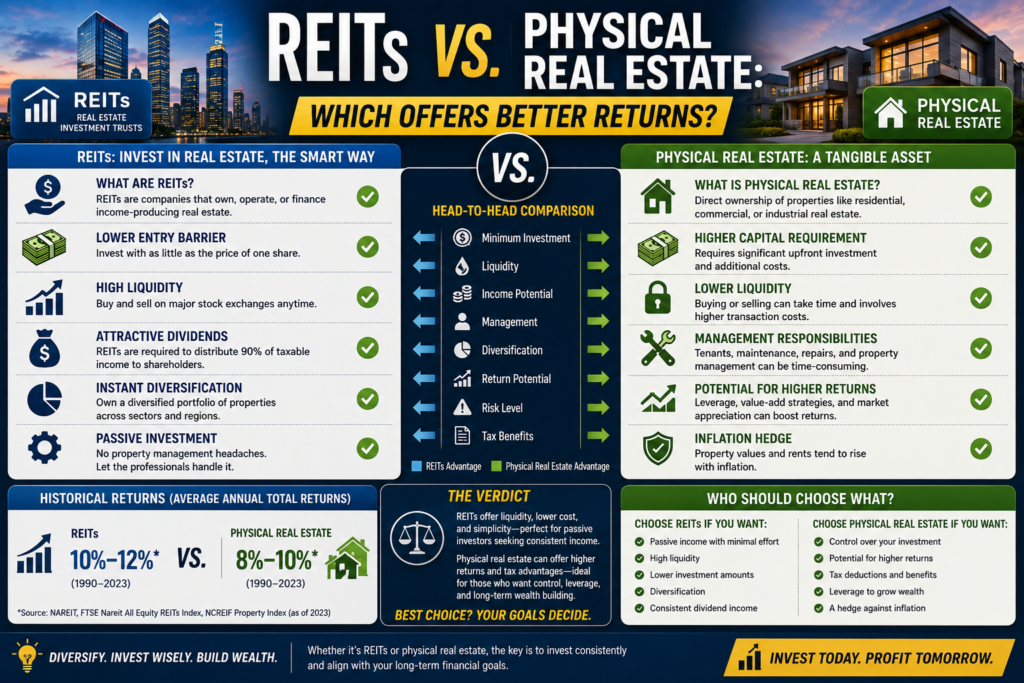
When you purchase physical property, you hold direct title to a tangible asset. You control the leverage, dictate the lease terms, and capture every dollar of cash flow and appreciation. On the flip side, analyzing REITs vs. physical real estate reveals that Real Estate Investment Trusts function like mutual funds. They pool capital from thousands of shareholders to buy massive commercial portfolios—such as data centers, healthcare complexes, or apartment towers—while trading publicly on major stock exchanges.
- Capital Requirements: Physical properties demand thousands in down payments; shares can be bought for the price of a single lunch.
- Operational Control: You are the boss with direct holdings; public funds leave all management decisions to corporate executives.
- Liquidity Profiles: Selling a house takes months; selling stock shares takes seconds.
Understanding these operational gaps is vital when debating REITs vs. physical real estate for your long-term wealth strategy.
Analyzing Returns: Cash Flow, Appreciation, and Leverage
When investors ask which option yields superior profits, they are usually talking about total return. Both pathways generate wealth, but they do so through entirely different levers.
The Power of Leverage in Physical Properties
One major advantage of buying tangible buildings is debt leverage. If you put down 20% on a multi-family property, a bank lends you the remaining 80%. When the property appreciates, you gain appreciation on the entire asset value, not just your initial cash outlay. This amplification effect is why many traditional investors swear by physical holdings. When evaluating REITs vs. physical real estate, this leverage factor heavily tilts the scale for hands-on entrepreneurs. You can review guidelines on real estate economics to understand how leverage impacts long-term capital yields.
Dividend Yields and Compounding in Public Funds
Public trusts do not rely on personal bank loans in the same way, but they are legally required to distribute at least 90% of their taxable income to shareholders as dividends. This makes public shares incredible cash-flow generators for passive portfolios. Furthermore, comparing REITs vs. physical real estate highlights that public shares allow for instant dividend reinvestment, letting your wealth compound automatically without manual property intervention. You can check insights on real estate investment trust mechanics to see how federal tax laws govern corporate distributions.
Liquidity, Effort, and Time Commitment
Time is our most precious non-renewable resource. How much of your personal weekend freedom are you willing to sacrifice in exchange for higher potential returns?
Physical holdings demand active management. Even if you hire a professional property management company, you still oversee the managers, review CapEx budgets, and handle tax filings. Conversely, public funds offer true passivity. When comparing REITs vs. physical real estate, the effort gap is staggering. You never have to fix a leaking roof or vet a tenant when you own liquid corporate shares.
Furthermore, liquidity defines market adaptability. If an emergency strikes, cashing out public shares takes seconds. Unloading a rental property during a market downturn can take months of painful price slashing and escrow negotiations.
Common Misconceptions in the Debate
Investors often cling to rigid dogmas when choosing their strategy, missing the broader financial picture.
- “Physical property is always safer”: Real estate markets crash locally, and a bad neighborhood trend can wipe out your equity faster than a diversified stock index.
- “REITs aren’t real real estate”: Public funds own massive physical buildings and infrastructure; you simply own a fractional corporate slice rather than a deed.
- “You can’t use leverage with public shares”: While true for standard retail accounts, sophisticated investors can utilize margin, though it introduces significant risk.
Dissecting these myths helps clarify the true performance metrics behind REITs vs. physical real estate.
FAQs
Which option provides better historical returns?
Historically, both asset classes deliver comparable long-term total returns averaging between 8% and 12%, though physical properties often pull ahead when accounting for aggressive leverage and tax write-offs, whereas public funds win on pure convenience and compounding speed.
Do I need to be an accredited investor to buy REITs?
No. Publicly traded equity funds can be purchased by anyone with a standard retail brokerage account for the price of a single share, making them vastly more accessible than private syndications or physical buildings.
How are dividends taxed in public funds?
Most distributions from public funds are taxed as ordinary income rather than qualified dividends, though a portion may be treated as a return of capital, which lowers your cost basis.
Can I do a 1031 exchange with public shares?
No. Tax-deferred 1031 exchanges apply strictly to physical real estate and direct property holdings, whereas public shares are treated like standard equities inside taxable or retirement accounts.
Which choice is better for a beginner investor?
For beginners with limited capital and zero desire to field late-night tenant complaints, public shares offer a frictionless entry point into property markets. For hands-on operators with deep capital reserves, physical holdings provide unmatched control.
Conclusion
Deciding between these two powerful wealth-building vehicles ultimately depends on your lifestyle goals and resource availability. If you crave operational control, love analyzing neighborhood micro-markets, and want to leverage bank debt, physical property is hard to beat. If you prefer instant diversification, absolute liquidity, and zero maintenance headaches, public funds offer an incredible alternative. Whichever path you choose, understanding the mechanics of REITs vs. physical real estate ensures your capital is deployed intelligently to secure your financial future.
