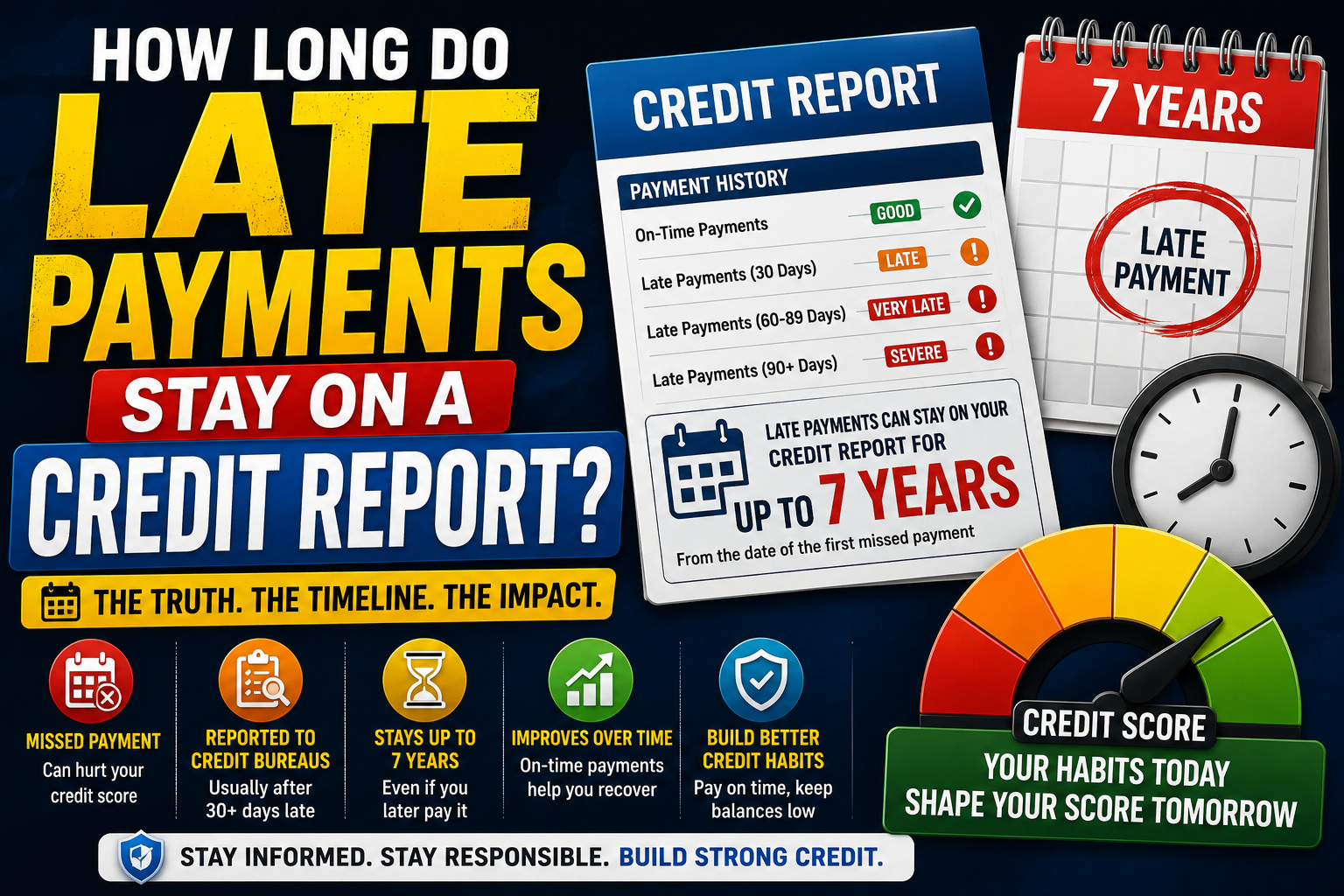
Learn how long late payments stay on a credit report, how they affect your credit score, and practical strategies to rebuild your credit history after missed payments.
Table of Contents
Your credit report is one of the most important financial documents associated with your name. Whether you’re applying for a mortgage, car loan, personal loan, credit card, or even renting an apartment, lenders and financial institutions often review your credit report before making a decision.
Among all the information recorded in a credit report, late payments can have one of the biggest impacts on your financial reputation. Missing even a single payment may lower your credit score and remain visible to lenders for years. Many people assume that paying the overdue amount immediately removes the negative mark, but that’s not how credit reporting works.
Understanding how long late payments remain on a credit report, how they influence your creditworthiness, and what steps you can take to recover is essential for maintaining strong financial health.
In this guide, we’ll explain everything you need to know about late payments on a credit report, including how they’re reported, how long they remain, their impact on your credit score, and practical ways to rebuild your credit profile.
What Is a Credit Report?
A credit report is a detailed record of your borrowing and repayment history. It provides lenders with a snapshot of how you’ve managed credit over time.
A typical credit report may include:
- Credit cards
- Personal loans
- Mortgages
- Auto loans
- Student loans
- Payment history
- Credit inquiries
- Outstanding balances
- Public financial records (where applicable)
Lenders use this information to assess the likelihood that you’ll repay future debts responsibly.
To learn more about credit reports, visit the Consumer Financial Protection Bureau (CFPB):
https://www.consumerfinance.gov
What Is Considered a Late Payment?
A payment is generally considered late when you fail to make at least the required minimum payment by the due date specified in your credit agreement.
Many lenders don’t immediately report a missed payment to credit bureaus on the first day after the due date.
Instead, payments are often categorized by how overdue they are, such as:
- 30 days late
- 60 days late
- 90 days late
- 120 days late
- 150 days late
- 180 days or more late
The longer a payment remains unpaid, the more serious its impact may become.
How Long Do Late Payments Stay on a Credit Report?
In many countries, including the United States, late payments can remain on a credit report for up to seven years from the date of the original missed payment.
Even after you eventually pay the overdue balance, the payment history itself generally remains visible during that reporting period.
However, there’s an important distinction:
A paid late payment is generally viewed more favorably than an unpaid late payment.
Although the record remains, lenders may appreciate that you’ve resolved the outstanding obligation.
For official guidance, visit AnnualCreditReport.com:
https://www.annualcreditreport.com
Why Do Late Payments Stay So Long?
Credit reports are designed to provide lenders with a historical record of borrowing behavior.
Lenders want to know:
- Do you consistently pay on time?
- Have you experienced financial difficulties?
- How frequently have payments been missed?
- Have your repayment habits improved over time?
Maintaining historical payment information allows lenders to make more informed lending decisions.
How Late Payments Affect Your Credit Score
Payment history is one of the most influential factors in most major credit scoring models.
Even a single late payment can reduce your credit score, particularly if you previously maintained an excellent payment history.
Several factors influence the impact:
- How late the payment was
- Number of missed payments
- Frequency of late payments
- Overall credit history
- Existing credit score
- Whether the account has been brought current
Generally, multiple late payments cause greater damage than an isolated incident.
Does Paying a Late Payment Remove It?
No.
Paying the overdue amount does not automatically remove the late payment from your credit report.
Instead, your report will usually show:
- The payment was late.
- The account has since been paid or brought current.
While the late payment history remains, updating the account status demonstrates financial responsibility moving forward.
Can Late Payments Be Removed Early?
Sometimes—but only under certain circumstances.
Reporting Error
If the late payment resulted from an error, you may dispute the information with the credit bureau.
Examples include:
- Incorrect payment dates
- Duplicate reporting
- Identity theft
- Fraudulent accounts
If the investigation confirms the information is inaccurate, the record may be corrected or removed.
Goodwill Adjustment
Some lenders may voluntarily remove a late payment after receiving a goodwill request, particularly if:
- You’ve been a long-term customer.
- The missed payment was isolated.
- You have an otherwise excellent payment history.
However, lenders are not obligated to grant these requests.
What Happens If You Never Pay?
Ignoring a late payment can lead to more serious consequences.
Depending on the lender and local regulations, unpaid accounts may result in:
- Additional late fees
- Higher interest charges
- Collection agency involvement
- Account closure
- Legal action
- Loan default
- Charge-offs
These events can cause even greater damage to your credit report than the original missed payment.
How to Recover After a Late Payment
Although late payments can affect your credit score, recovery is possible.
Pay Outstanding Balances Quickly
Bringing accounts current reduces ongoing damage and demonstrates responsibility.
Make Every Future Payment on Time
Consistent on-time payments gradually strengthen your credit history.
Payment history remains one of the most important components of a strong credit profile.
Keep Credit Utilization Low
Avoid using a high percentage of your available credit.
Lower credit utilization supports healthier credit scores.
Avoid Applying for Unnecessary Credit
Multiple credit applications within a short period may temporarily lower your credit score.
Only apply for credit when necessary.
Review Your Credit Report Regularly
Regular monitoring helps identify reporting errors or fraudulent activity early.
Many countries provide consumers with access to free credit reports through authorized services.
How Long Does It Take for Your Credit Score to Recover?
Recovery depends on several factors.
These include:
- Severity of the late payment
- Overall credit history
- Number of missed payments
- Current debt levels
- Future payment behavior
Individuals who consistently make on-time payments after a late payment often see gradual improvement over time.
While the record may remain for several years, its influence generally decreases as it becomes older and is followed by positive credit behavior.
Tips to Avoid Future Late Payments
Building good financial habits is the best way to protect your credit report.
Consider these strategies:
- Enable automatic payments.
- Set payment reminders.
- Maintain an emergency savings fund.
- Track payment due dates.
- Keep sufficient funds in your account.
- Review monthly statements regularly.
Small preventive measures can significantly reduce the risk of missed payments.
Common Myths About Late Payments
Myth 1: Paying Immediately Removes the Late Payment
False.
The payment history usually remains, although the account status is updated.
Myth 2: One Late Payment Permanently Ruins Your Credit
False.
While a late payment can lower your credit score, responsible financial behavior over time can help rebuild your credit profile.
Myth 3: Checking Your Own Credit Report Hurts Your Credit Score
False.
Reviewing your own credit report is generally considered a soft inquiry and typically does not affect your credit score.
Frequently Asked Questions
How long do late payments stay on a credit report?
In many countries, including the United States, late payments generally remain on a credit report for up to seven years from the date of the original missed payment.
Can I remove a late payment after paying it?
Paying the balance updates the account status but does not automatically remove the late payment history. However, inaccurate information may be disputed.
Do all late payments affect my credit score?
Most reported late payments can affect your credit score, although the severity depends on how late the payment was and your overall credit history.
Will my credit score improve over time?
Yes. Consistently making on-time payments, maintaining low credit utilization, and managing credit responsibly can gradually improve your credit profile.
Conclusion
Your credit report plays a critical role in determining your financial reputation, and late payments are among the most significant factors lenders consider when evaluating credit applications. Although a late payment can remain on your credit report for up to seven years in many jurisdictions, it doesn’t have to define your financial future.
The key to recovery is consistent positive behavior. Paying outstanding balances, making future payments on time, maintaining low credit utilization, and regularly reviewing your credit report can gradually strengthen your credit profile. Over time, the impact of older late payments generally diminishes, especially when followed by a strong history of responsible credit management.
Understanding how credit reporting works empowers you to make informed financial decisions, protect your borrowing opportunities, and build a healthier financial future with confidence.
Learn the difference between Cash vs Accrual Accounting, how each accounting method works, their advantages, disadvantages, and which approach is best for businesses and investors.
