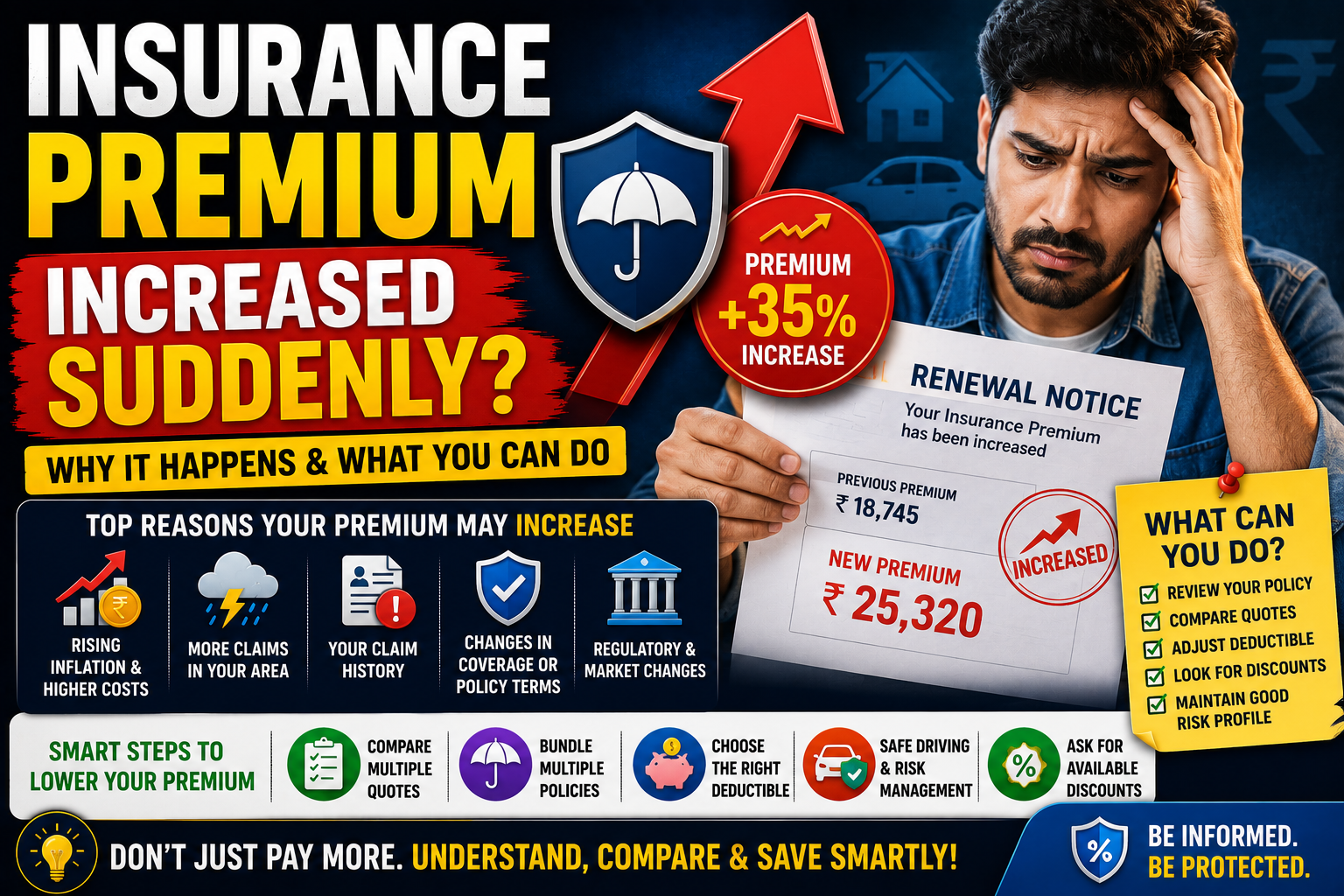
Learn why your Insurance Premium Increased unexpectedly, the common factors behind higher insurance costs, and practical ways to lower your premiums without sacrificing essential coverage.
Table of Contents
Paying insurance premiums is a normal part of protecting your finances. Whether it’s health insurance, auto insurance, homeowners insurance, travel insurance, life insurance, or business insurance, policyholders expect their premiums to remain relatively stable from one renewal period to the next.
That’s why receiving a renewal notice with a significantly higher premium can be both surprising and frustrating. Many people immediately assume they’ve done something wrong or that the insurance company is simply charging more without explanation. In reality, insurance premiums are influenced by many factors, and not all of them are related to your personal claims history.
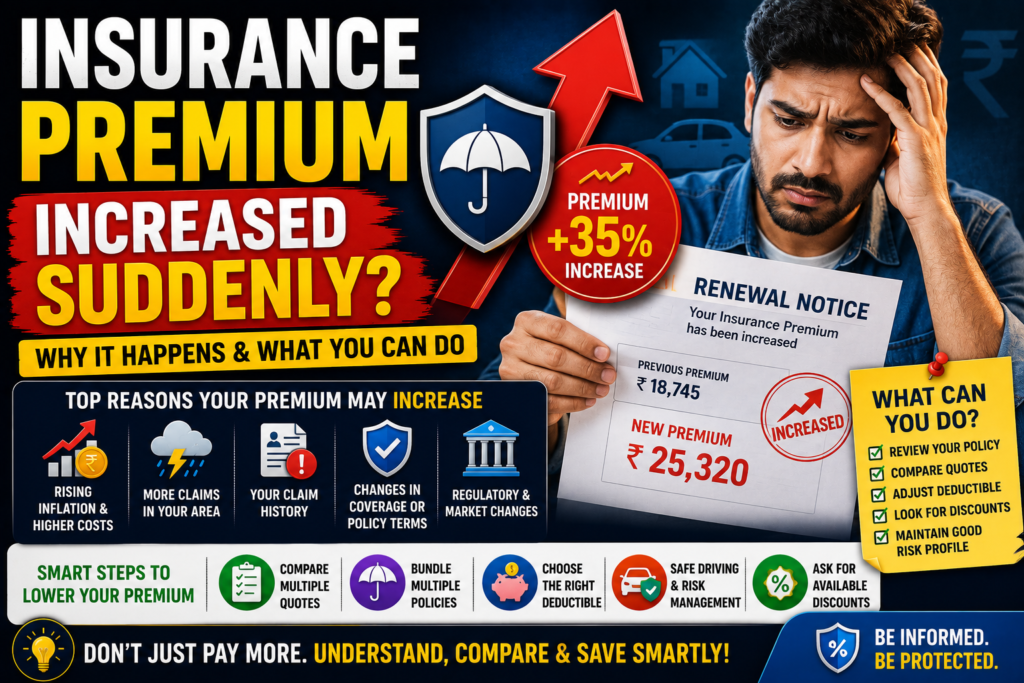
An Insurance Premium Increased notice can result from inflation, rising repair costs, natural disasters, changes in risk assessment, regulatory updates, market conditions, or adjustments to your personal risk profile. Understanding these factors can help you determine whether the increase is reasonable and identify opportunities to reduce future insurance costs.
In this guide, we’ll explain why insurance premiums increase, how insurers calculate risk, what steps you can take to lower your premium, and when it may be worth comparing policies from other providers.
What Is an Insurance Premium?
An insurance premium is the amount you pay to an insurance company in exchange for financial protection under an insurance policy.
Depending on the policy, premiums may be paid:
- Monthly
- Quarterly
- Semi-annually
- Annually
In return, the insurer agrees to provide coverage for eligible losses according to the terms of the policy.
Insurance companies calculate premiums by estimating the likelihood and potential cost of future claims.
To learn more about how insurance works, visit the Insurance Information Institute (Triple-I):
Why Did My Insurance Premium Increase?
There isn’t always a single reason.
Insurance companies regularly review both individual risk profiles and broader market conditions when determining renewal premiums.
Some increases are related to your own policy, while others affect nearly every policyholder.
Inflation and Rising Costs
One of the biggest reasons premiums increase globally is inflation.
When prices rise, insurance companies face higher costs for:
- Vehicle repairs
- Construction materials
- Medical treatment
- Labor
- Replacement parts
- Legal expenses
As claim costs increase, insurers often adjust premiums to reflect these higher expenses.
The Organisation for Economic Co-operation and Development (OECD) provides information on global inflation trends:
Increased Claims in Your Area
Even if you haven’t filed a claim, insurers evaluate risks across broader geographic regions.
Premiums may rise if your area experiences:
- Severe storms
- Floods
- Wildfires
- Theft
- Vandalism
- Increased accident rates
Higher regional claim costs may affect all policyholders in that location.
Your Personal Claims History
Insurance companies consider previous claims when calculating future risk.
Depending on the type of insurance, multiple claims within a relatively short period may contribute to higher renewal premiums.
However, not every claim automatically results in a premium increase.
Some insurers also offer claim-free discounts that may be reduced after a claim.
Changes in Your Risk Profile
Life changes can affect insurance pricing.
Examples include:
- Purchasing a more expensive vehicle
- Home renovations
- Business expansion
- Increased property value
- Higher coverage limits
- Adding additional insured individuals
Any factor that increases the insurer’s potential financial exposure may influence premiums.
Changes in Insurance Market Conditions
Insurance pricing is also affected by broader market trends.
Examples include:
- Higher reinsurance costs
- Economic uncertainty
- Increased catastrophic losses
- Rising fraud
- Regulatory changes
- Investment market performance
These industry-wide factors may affect millions of policyholders simultaneously.
Learn more about the global insurance industry through the International Association of Insurance Supervisors (IAIS):
Policy Coverage Changes
Premiums may increase because your policy itself has changed.
Examples include:
- Higher coverage limits
- Additional riders
- Expanded benefits
- Lower deductibles
- New optional protections
Sometimes policyholders request these changes without realizing they increase premium costs.
Always review your renewal documents carefully.
Discounts That Expired
Many insurers offer discounts for:
- New customers
- Bundled policies
- Safe driving
- Claim-free history
- Home security systems
- Automatic payments
If one of these discounts expires, your premium may increase even though the underlying policy remains the same.
How Insurance Companies Calculate Premiums
Every insurer uses its own pricing models, but premiums generally reflect a combination of factors.
These may include:
- Probability of future claims
- Cost of previous claims
- Coverage amount
- Deductible
- Geographic location
- Property characteristics
- Vehicle characteristics
- Age of insured assets
- Market conditions
- Historical loss data
Modern insurers increasingly use advanced data analytics to estimate future risk more accurately.
What Should You Do If Your Insurance Premium Increased?
Receiving a higher renewal quote doesn’t necessarily mean you must accept it immediately.
Several practical steps may help.
Review Your Renewal Notice
Carefully compare your previous policy with the new renewal.
Check for changes in:
- Coverage
- Deductibles
- Policy limits
- Optional benefits
- Premium breakdown
Sometimes increases result from expanded coverage rather than higher pricing alone.
Contact Your Insurance Company
Ask your insurer:
- Why did my premium increase?
- Have my coverage terms changed?
- Are additional discounts available?
- Can my deductible be adjusted?
- Are there policy options that reduce costs?
Many insurers are willing to explain pricing changes.
Compare Quotes
Insurance pricing varies significantly between providers.
Obtaining multiple quotes helps determine whether your renewal remains competitive.
Be sure to compare:
- Coverage limits
- Deductibles
- Exclusions
- Customer service
- Claims handling
- Premiums
The lowest premium isn’t always the best value.
Increase Your Deductible
Choosing a higher deductible often reduces premium costs.
However, ensure you could comfortably afford the deductible if you need to file a claim.
Bundle Insurance Policies
Many insurers offer discounts when customers combine multiple policies, such as:
- Home and auto
- Property and liability
- Business and commercial vehicle
Bundling may reduce overall insurance costs.
Maintain a Good Risk Profile
Reducing risk can sometimes improve future pricing.
Examples include:
- Installing security systems
- Improving property safety
- Practicing safe driving
- Maintaining insured assets
- Reducing unnecessary claims
Lower risk often leads to more favorable underwriting.
Should You Switch Insurance Companies?
Sometimes switching providers makes financial sense.
However, price should not be the only consideration.
Evaluate:
- Financial strength
- Customer service
- Claims reputation
- Coverage quality
- Exclusions
- Policy flexibility
Independent financial ratings can help assess insurer stability.
The AM Best rating agency provides financial strength assessments for many insurance companies:
Can You Negotiate Your Premium?
Unlike many fixed-price products, insurance premiums sometimes allow room for discussion.
Ask your insurer whether adjustments are available through:
- Coverage modifications
- Deductible changes
- New discounts
- Updated risk information
- Bundled policies
While negotiations won’t always reduce premiums, asking questions may uncover savings opportunities.
Common Mistakes After a Premium Increase
Many policyholders react emotionally after receiving higher renewal quotes.
Common mistakes include:
- Automatically renewing without comparison.
- Reducing essential coverage solely to lower costs.
- Ignoring available discounts.
- Overlooking changes in policy terms.
- Failing to ask the insurer for an explanation.
Taking time to review your options often leads to better long-term decisions.
Frequently Asked Questions
Why did my Insurance Premium Increased even though I didn’t file a claim?
Premiums may increase because of inflation, higher repair costs, regional claims, market conditions, regulatory changes, or adjustments in the insurer’s overall risk calculations.
Can I reduce my insurance premium?
Yes. Depending on your situation, you may lower costs by comparing quotes, increasing deductibles, bundling policies, maintaining a good risk profile, or qualifying for additional discounts.
Should I switch insurance companies?
Switching may be worthwhile if another provider offers comparable coverage at a lower price. Always compare policy terms, exclusions, customer service, and financial strength—not just premiums.
Does filing one claim always increase premiums?
Not necessarily. The impact depends on the insurer, the type of claim, your claims history, and local market practices.
Conclusion
Receiving notice that your Insurance Premium Increased can be frustrating, but it doesn’t always mean you’re paying unfairly. Insurance premiums are influenced by a wide range of factors, including inflation, regional claim trends, changing market conditions, policy adjustments, and your individual risk profile. Understanding these factors helps you evaluate whether the increase reflects broader industry conditions or something specific to your policy.
Before accepting a higher premium, take the time to review your renewal documents, ask your insurer for a clear explanation, compare quotes from other providers, and explore available discounts or coverage adjustments. Making informed decisions rather than reacting quickly can help you control insurance costs while maintaining the protection you need. In today’s changing insurance market, staying informed is one of the most effective ways to manage both risk and long-term financial security.
Learn how to avoid International Payment Failures with this complete guide. Discover the most common causes of failed international payments, practical prevention tips, and best practices for secure global money transfers.
