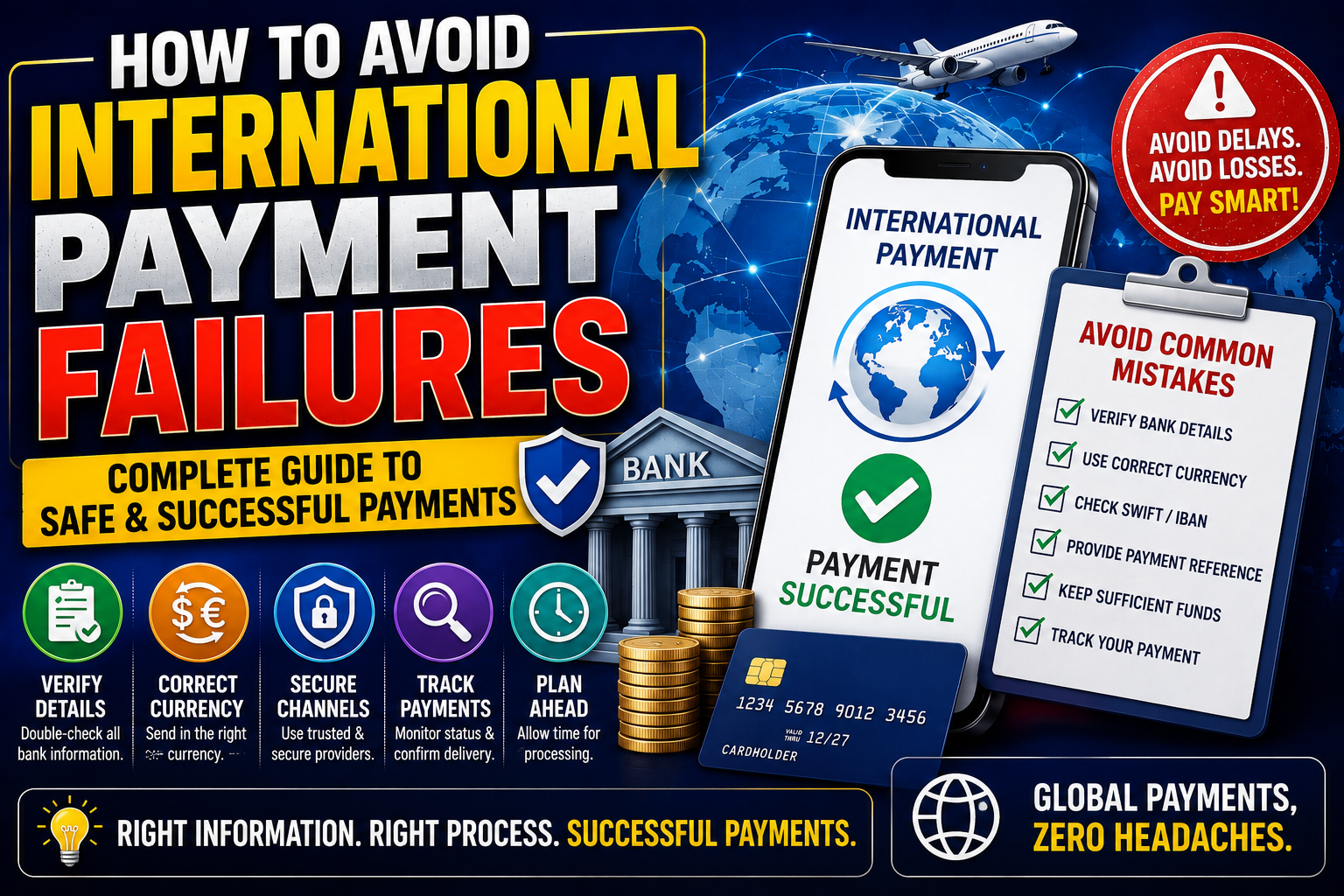
Learn how to avoid International Payment Failures with this complete guide. Discover the most common causes of failed international payments, practical prevention tips, and best practices for secure global money transfers.
Table of Contents
International payments have become an essential part of modern life. Businesses pay overseas suppliers, freelancers receive payments from international clients, families send money across borders, travelers make purchases abroad, and investors transfer funds to foreign markets every day.
Although international payment systems have become faster and more reliable, payment failures still occur more often than many people realize. A failed international payment can delay shipments, interrupt business operations, create customer dissatisfaction, and sometimes even result in financial losses or additional bank charges.
Unlike domestic payments, international transfers involve multiple financial institutions, different currencies, varying banking regulations, compliance checks, and cross-border payment networks. Even a small mistake—such as an incorrect account number or mismatched beneficiary name—can prevent a payment from reaching its destination.
Understanding how international payments work and learning how to avoid common mistakes can significantly reduce the risk of payment failures.
In this guide, we’ll explain the most common causes of International Payment Failures, how banks process cross-border transactions, practical tips to avoid payment problems, and what to do if an international payment fails.
What Are International Payment Failures?
International Payment Failures occur when a cross-border payment cannot be completed successfully.
Instead of reaching the intended recipient, the payment may be:
- Rejected
- Delayed
- Returned
- Suspended
- Pending for investigation
- Cancelled
Payment failures may occur before the funds leave the sending bank or after the transfer has entered the international banking network.
The complexity of international payment systems means multiple organizations may participate in processing a single transaction.
To learn more about global payment systems, visit the Bank for International Settlements (BIS):
How International Payments Work
Unlike domestic bank transfers, international payments often pass through several institutions before reaching the recipient.
A typical transaction may involve:
- The sending bank
- Correspondent banks
- Currency exchange providers
- International payment networks
- The receiving bank
Each institution performs its own verification, compliance, and security checks.
The more participants involved, the greater the possibility of delays or processing errors.
Common Causes of International Payment Failures
Understanding why payments fail is the first step toward preventing them.
Incorrect Bank Account Details
One of the most common causes of payment failure is inaccurate beneficiary information.
Examples include:
- Incorrect account number
- Wrong IBAN
- Invalid SWIFT/BIC code
- Misspelled beneficiary name
- Incorrect routing number
Even a single incorrect digit may prevent successful delivery.
Incorrect Currency Selection
Some bank accounts only accept specific currencies.
Sending funds in an unsupported currency may cause the receiving bank to reject the payment.
Always confirm the recipient’s preferred payment currency before initiating the transfer.
Compliance and Regulatory Checks
Financial institutions must comply with international regulations designed to prevent:
- Money laundering
- Terrorist financing
- Financial sanctions
- Fraud
Payments may be delayed while banks perform additional verification.
The Financial Action Task Force (FATF) establishes international standards for combating money laundering and terrorist financing:
Sanctions Screening
Banks screen international transactions against global sanctions lists.
If a payment involves a sanctioned country, company, or individual, the transaction may be blocked or frozen pending further review.
Insufficient Funds
If the sender’s account lacks sufficient funds to cover:
- Transfer amount
- Currency conversion costs
- Bank fees
the payment may fail before processing begins.
Incorrect Payment Reference
Some international business payments require invoice numbers or payment references.
Missing or incorrect references can delay payment allocation or manual processing.
Banking System Maintenance
Occasionally, banks perform scheduled maintenance or experience technical issues.
During these periods, payment processing may be temporarily interrupted.
Expired Beneficiary Information
Businesses occasionally update their:
- Bank accounts
- SWIFT codes
- Banking partners
Sending funds using outdated banking information may result in payment rejection.
Why International Payments Take Longer Than Domestic Transfers
International payments involve more verification than domestic transfers.
Banks may verify:
- Customer identity
- Source of funds
- Beneficiary information
- Regulatory compliance
- Currency conversion
- Anti-fraud controls
These additional checks improve financial security but can also increase processing times.
How to Avoid International Payment Failures
Fortunately, many payment failures can be prevented with careful preparation.
Verify Beneficiary Information
Before sending money, confirm:
- Beneficiary name
- Account number
- IBAN
- SWIFT/BIC code
- Bank address
- Payment reference
Always verify details directly with the recipient rather than relying on previous records.
Double-Check Currency Requirements
Confirm:
- Which currency the recipient wants
- Whether their account accepts that currency
- Any local banking restrictions
Incorrect currency selection may trigger payment rejection or unexpected conversion fees.
Use Trusted Financial Institutions
Choose reputable banks or regulated payment providers for international transfers.
Reliable institutions typically offer:
- Better security
- Faster processing
- Improved tracking
- Stronger fraud protection
Learn more about global payment messaging through SWIFT:
Review Transfer Fees
International payments may involve:
- Sending bank fees
- Correspondent bank charges
- Receiving bank fees
- Currency conversion fees
Understanding these costs helps prevent payment shortfalls.
Keep Payment Records
Maintain copies of:
- Payment confirmations
- Transaction reference numbers
- Invoices
- Beneficiary instructions
- Bank receipts
These documents simplify investigations if problems arise.
Avoid Last-Minute Transfers
International payments may require additional processing time.
Businesses should avoid sending critical payments immediately before:
- Weekends
- Public holidays
- Financial reporting deadlines
Planning ahead reduces operational disruptions.
Monitor Transaction Status
Many banks provide payment tracking tools.
Regular monitoring allows problems to be identified quickly before significant delays occur.
What Should You Do If an International Payment Fails?
If your payment is unsuccessful:
Contact Your Bank
Provide:
- Transaction reference number
- Payment amount
- Date
- Beneficiary information
The bank can investigate the transaction status.
Verify Recipient Information
Ask the beneficiary to confirm:
- Account number
- IBAN
- SWIFT code
- Account name
Correcting inaccurate information often resolves the issue.
Request a Payment Trace
Many banks can initiate a payment trace to determine where the funds are currently located within the international payment network.
Monitor Refunds
If the payment cannot be completed, funds are often returned to the sender after deducting applicable fees.
Refund timing varies depending on the institutions involved.
How Businesses Can Reduce International Payment Risks
Organizations making frequent international payments should establish standardized procedures.
These may include:
- Beneficiary verification processes
- Multi-level payment approvals
- Regular banking information updates
- Supplier confirmation procedures
- Secure payment authorization systems
Strong internal controls reduce both operational errors and fraud risk.
Common Myths About International Payment Failures
Myth 1: International Payments Always Arrive Within One Day
False.
Processing times vary depending on currencies, banks, regulations, and payment networks.
Myth 2: Once Money Leaves My Bank, Nothing Can Go Wrong
False.
Payments may still be delayed, suspended, or returned during intermediary processing.
Myth 3: Every Failed Payment Means Fraud
False.
Most payment failures result from administrative errors, compliance reviews, incorrect banking information, or technical issues.
Frequently Asked Questions
What are International Payment Failures?
International Payment Failures occur when a cross-border payment cannot be successfully completed because of incorrect banking information, compliance checks, technical issues, insufficient funds, or other processing problems.
Why was my international payment rejected?
Common reasons include incorrect beneficiary information, unsupported currencies, sanctions screening, regulatory compliance checks, or insufficient account balances.
Can a failed international payment be recovered?
In many cases, yes. Depending on where the payment failed, the funds may be corrected, reprocessed, or returned to the sender after investigation.
How can I reduce the risk of payment failures?
Verify beneficiary details, confirm currency requirements, use trusted financial institutions, keep payment records, and review transaction information carefully before submitting the transfer.
Conclusion
Understanding International Payment Failures is essential for anyone who regularly sends or receives money across borders. While international payment systems are highly sophisticated, they involve multiple financial institutions, regulatory checks, currency conversions, and security procedures that can occasionally lead to delays or failed transactions. Fortunately, many of these issues are preventable through careful planning and attention to detail.
By verifying beneficiary information, confirming currency requirements, maintaining accurate payment records, and using trusted financial institutions, both individuals and businesses can significantly reduce the risk of international payment failures. In today’s increasingly connected global economy, following these best practices not only improves payment reliability but also helps protect your finances, business relationships, and operational efficiency.
Learn how to appeal an Insurance Claim Denial with this step-by-step guide. Discover common reasons claims are denied, how the appeals process works, and practical tips to improve your chances of a successful outcome.
